
Dentistry Transcription Services for Dental Practices
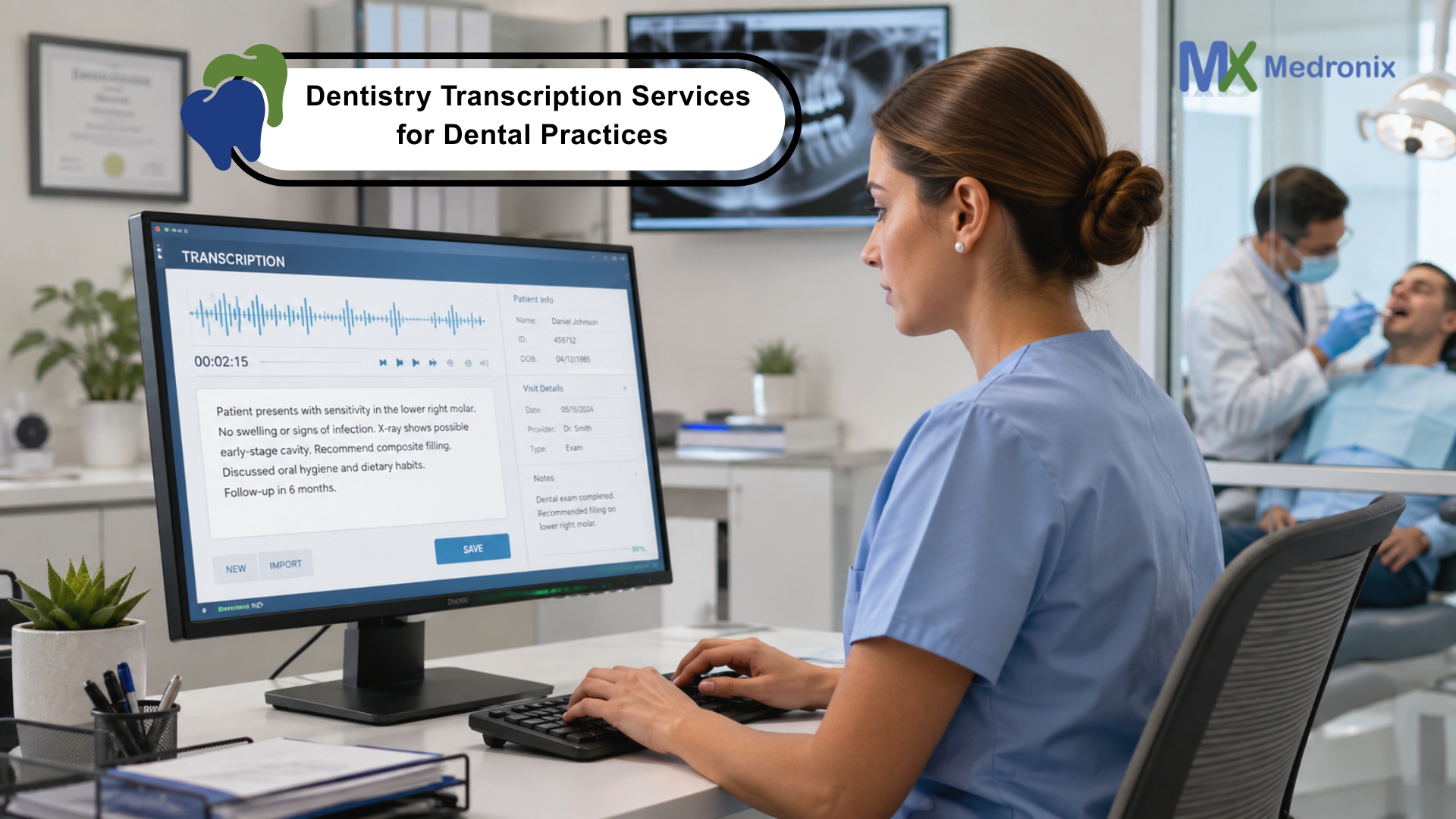
Running a dental practice is more than just treating patients and keeping the schedule on track. Dentists also spend a lot of time writing examination notes, treatment details, updating patient histories and writing follow-up notes.
For many dental professionals, documentation can be one of the biggest time consumers in the workday. It is hard to find time to type detailed clinical notes after seeing patients all day. This is where a dental transcription service can help.
What is dental transcription? It is when dentists speak out their notes instead of typing all the notes themselves. Expert transcription professionals then process these to provide clear and structured documentation. Less admin for the dental team, more time for their great work: Caring for patients.
What Is a Dentistry Transcription Service?
A dentistry transcription service helps dental professionals transcribe spoken clinical information into accurate written records. A dentist might dictate notes during a consultation, following an examination or immediately after a procedure. The recording is then transcribed and made ready to be incorporated in the patient’s record. These services may include a variety of dental documentation including examination notes, treatment schedules, procedure notes, referrals, consultations and follow-up documentation. Dental transcription is a different type of transcription than general transcription. The person doing the transcription needs to have knowledge of dental terminology and clinical language. The terms relating to restorative dentistry, orthodontics, periodontics, endodontics, prosthodontics and oral surgery have to be correctly understood and documented. And that familiarity can go a long way to making the final record a much better one.
Why Accurate Transcription Matters in Dentistry
Good documentation is important in ensuring continuity of care. When a patient comes back for a recall visit, the dental team should be able to look at the record and immediately know what happened at previous appointments. A good chart can document the patient’s concerns, findings of the examination, what treatment was done, recommendations, and next steps. Or, unclear or incomplete documentation can confuse staff as to a patient’s history. Professional dental transcription provides a consistent record without the need for dentists to spend hours typing after each visit. It also provides dental teams with a more practical way to keep up with documentation as patient volumes grow.
How Dental Transcription Saves Dentists Time
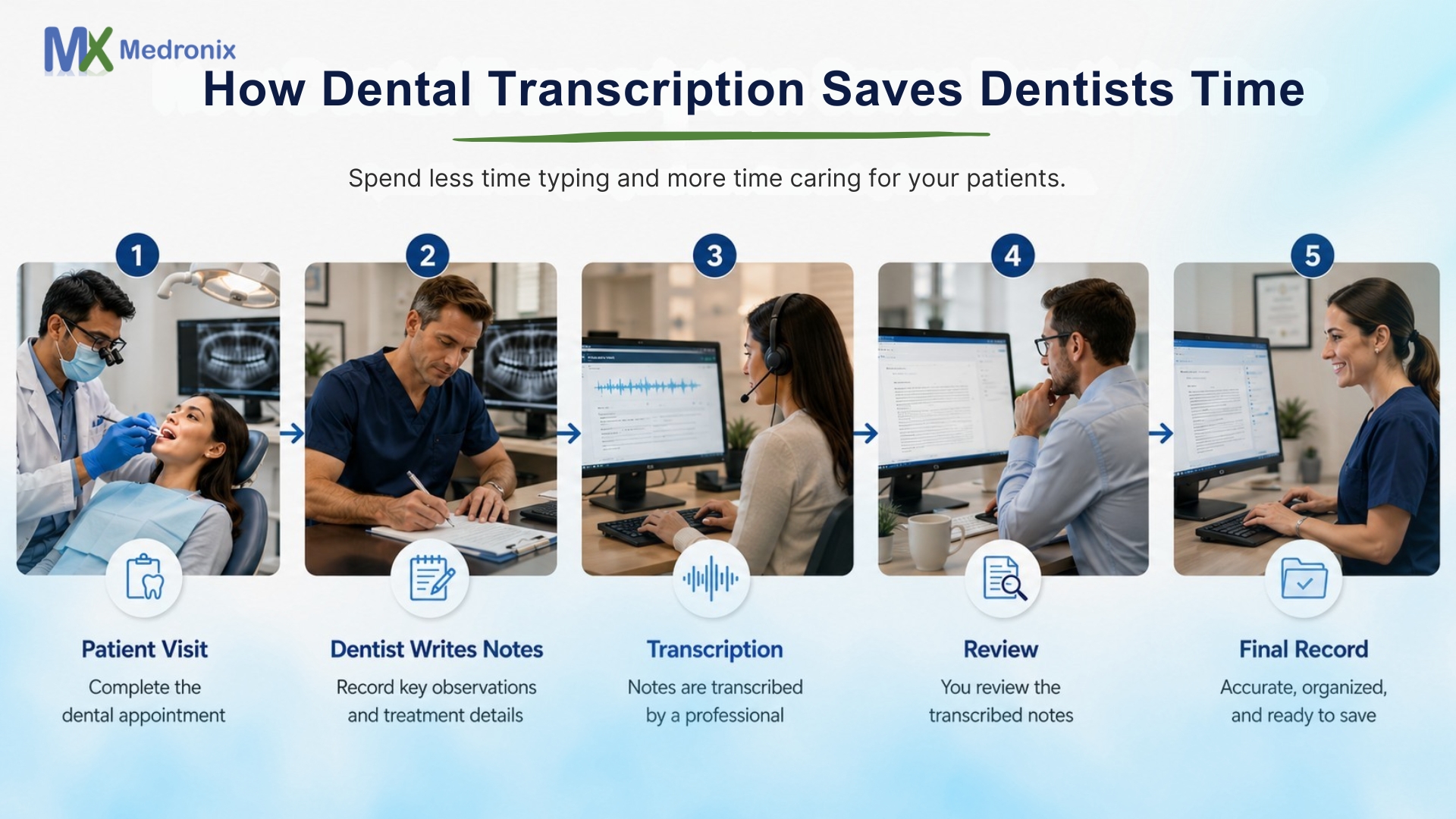
Time is one of the biggest challenges in a busy dental practice. A dentist may finish one appointment and immediately need to prepare for the next. You may only have minutes between patients to write down what happened. Taking detailed notes in those short gaps can quickly become stressful. Dentists can dictate their observations and treatment details with a dentistry transcription service while the information is still fresh. The process can be as easy as: Patient visit → Dentist writes notes → Transcription → Review → Final record The dentist can talk in a natural way and go to the next job, instead of sitting at a computer and typing every single detail. The time you save can add up to hours that can be spent on patient care, consultations, or other important responsibilities.
Better Documentation Without More Administrative Pressure
The dental record should be useful, easily understood, and sufficiently detailed to support future care. A trained transcriptionist can create the structured document from a dentist’s dictated notes, without altering the meaning. This can make records easier to review for dentists, hygienists, assistants and other staff who are authorized to view records. For example, if a patient comes back months after a procedure, the dental team can refer to past notes instead of relying on memory. Good documentation helps everyone understand what was done for treatment, and what was recommended next. Consistent documentation can also help ease communication across the team for practices that have multiple providers.
HIPAA compliance is key in dental transcription
Security is a big deal when you outsource transcription because dental records contain private patient information. The dental practice should choose a transcription provider that understands the need to protect patient information and has safeguards in place to handle clinical records.This becomes especially important when audio files and finished transcripts are sent electronically. A HIPAA compliant medical transcription service provider should have the right processes for confidentiality, secure handling of data, control of access and information protection. Before working with a transcription company, dental practices should ask how patient information is handled, where files are stored, how documents are transferred, and what measures are used to limit unauthorized access.
What Can Be Transcribed for a Dental Practice?
Dental transcription can support many of the documents created during everyday practice.
Services may include (depending on provider):
- Dental examination notes
- Patient medical and dental histories
- Treatment plans
- Procedure notes
- Consultation notes
- Referral letters
- Oral surgery documentation
- Periodontal notes
- Orthodontic documentation
- Prosthodontic records
- Follow-up notes
- Patient instructions
- Specialist consultation notes
Having these documents professionally transcribed can help reduce the amount of paperwork dentists need to manage themselves.
Why Human Expertise Still Matters
Technology has made transcription faster and easier, but human expertise in health care documentation is still valuable.
Dental terminology can be confusing and a dictated recording can have background noise, bad pronunciation, abbreviations, or words that sound alike. So a trained transcriptionist can understand what the dentist is really saying by understanding the context. Automated systems may miss errors, but human review can catch them.
For dental practices, accuracy should therefore be considered alongside turnaround time. A fast transcript is not useful if important clinical information has been misunderstood or recorded incorrectly.
How to Choose the Right Dentistry Transcription Service
Choosing a transcription provider is an important decision because the service will be handling clinical information and becoming part of the practice’s documentation workflow. Before making a decision, dental practices should consider several factors. Precision Governance & Superiority What is the process for evaluating the transcripts before they are returned to the practice, and how are discrepancies addressed? Ask about the details of the evaluations of the transcripts prior to being readmitted to practice, and how discrepancies are resolved. Protect patient information and confidentiality through appropriate measures. Turnaround Time Ask how fast transcripts are sent and if there is a rush service. Scalability The service needs to be scalable so that it can cope with the practice during busy and slow times.
-
Simple workflow
Submitting recordings and receiving completed documents should be straightforward and should not create additional administrative work. -
Reliable communication
The practice should find it easy to communicate with a good transcription provider when it has questions, corrections or specific formatting needs.
Simplify Dental Documentation
Frequently Asked Questions
What is a dentistry transcription service?
A dentistry transcription service receives a dentist’s dictated notes and transcribes them into accurate, organized clinical documentation to the patient’s record.
What benefits do dentists have from dental transcription services?
Dental transcription services help dentists save time on documentation and allow them to focus more on patients, treatment and the operations of the practice.
Is Dental Transcription HIPAA Compliant?
When a provider follows proper privacy, security and confidentiality practices, dental transcription can be HIPAA compliant.
What dental records may be copied?
Dental transcription may include examination notes, treatment strategies, procedural notes, referrals, consultation and follow up records.
How to choose a dental transcription service?
Find a provider with dental experience, good quality controls, secure processes and good turnaround times and responsive support.
One Response