
Dental Eligibility Verification for Small Practices
Insurance eligibility verification sounds simple on paper: confirm the patient has coverage, treat them, and get paid. For a small practice running lean, it rarely works that way. There’s no dedicated biller triple-checking every plan, no automated system quietly running checks overnight, and one denied claim can throw off the week’s collections. Here’s what actually matters when you’re verifying eligibility with a small team.
What Dental Eligibility Verification Really Means
Eligibility vs. Benefits Verification: Why the Difference Matters
Once you know the policy is active, four details determine what actually gets paid:
The Four Things That Actually Decide Your Reimbursement
Once you know the policy is active, four details determine what actually gets paid:
- Deductible: what the patient covers before the plan contributes anything
- Coinsurance: The percentage split between plan and patient for covered procedures
- Annual maximum: the ceiling the plan will pay in a benefit year, and how much of it is already used
- Frequency limits and waiting periods: how often a procedure is covered and whether new plans restrict major work for a set period
Skip any one of these and you’re quoting a number that won’t survive contact with the actual claim.
Why Small Practices Can't Afford to Skip It
One Denied Claim Hits Harder When You Don't Have a Billing Team
A large group practice can absorb a handful of denied claims without much disruption; there’s staff dedicated to chasing them down. A small practice doesn’t have that cushion. A single denial means someone at the front desk has to stop what they’re doing, call the payer, resubmit, and follow up again next week. Multiply that by a few denials a month, and it’s a meaningful chunk of staff time that isn’t going toward patients or collections.
The financial exposure is proportionally bigger too. A write-off that’s a rounding error for a multi-location DSO can be a real dent in a solo or two-provider practice’s monthly revenue.
The Retroactive Eligibility Trap
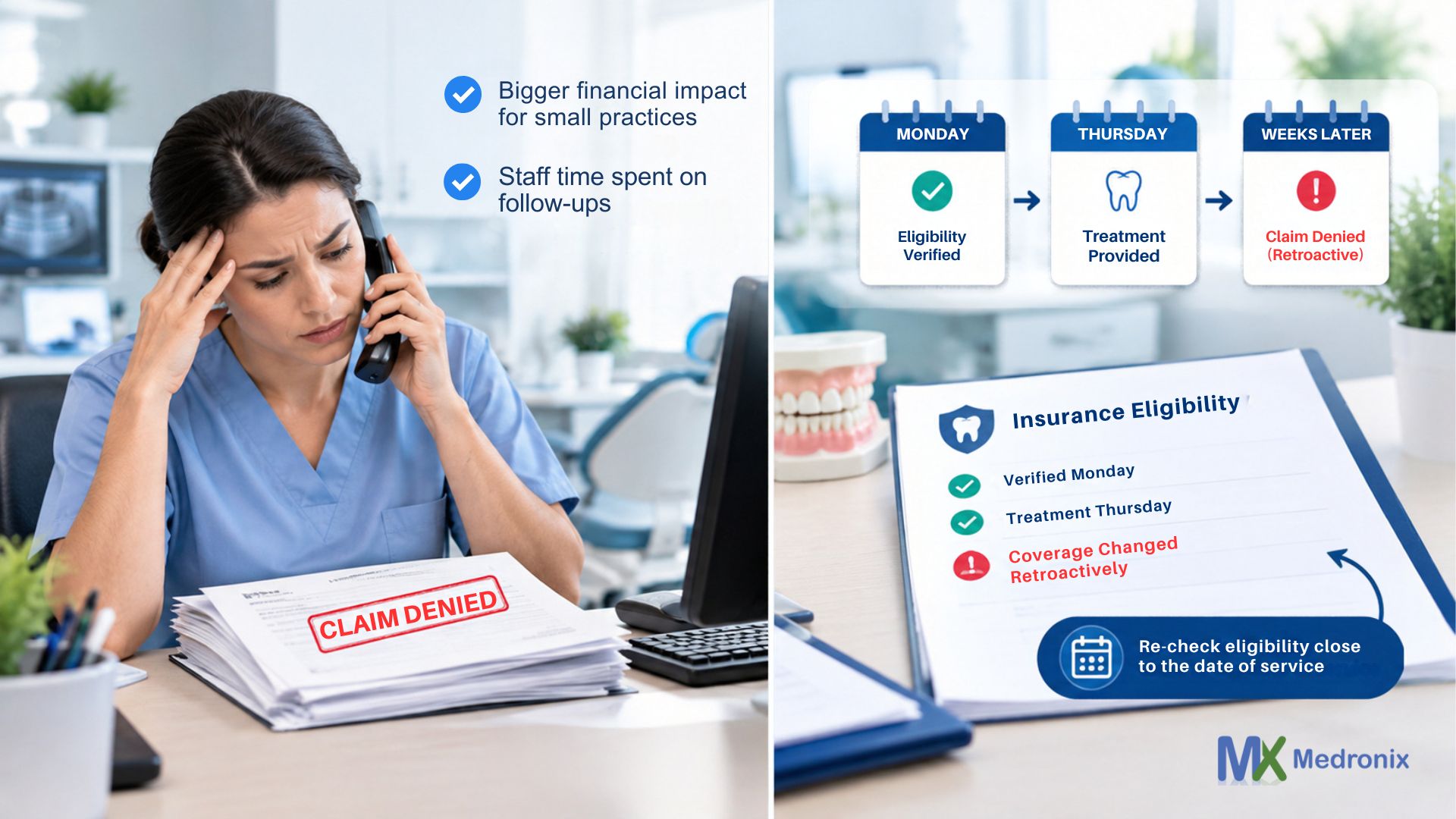
Here’s the detail that catches small practices off guard: insurance eligibility can change after you’ve already verified it. A patient’s employer can terminate their coverage, and the change doesn’t always reach the payer’s system right away. You verify on Monday and treat on Thursday, and the plan can still retroactively deny the claim or claw back payment weeks later.
The American Dental Association’s guidance is direct about this: practices should verify eligibility as close to the date of service as possible, not just days in advance, precisely because plans can apply eligibility changes retroactively. For a small practice, that means building in a quick same-day recheck isn’t optional overhead; it’s the one habit that protects you from money you thought was already collected.
Manual Verification: What's Realistic With a Small Front Desk
The Minimum Checklist for a Two-Person Team
You don’t need enterprise software to verify; you need consistency. A workable minimum checklist:
- Patient's full legal name and date of birth (not a nickname or maiden name)
- Member ID and group number
- Subscriber details, if the patient isn't the policyholder
- Policy effective date and, if available, termination date
- Annual maximum remaining and deductible status
- Frequency limit and last-paid date for the specific procedure being scheduled
Run this same list for every patient, every time, not just new patients. Returning patients change jobs and switch plans too, and they’re the ones most likely to fall through the cracks because “we already know them.”
Phone vs Payer Portal Which Is Worth Your Time
Payer portals are usually faster for a quick active/inactive check and basic plan details. But portals often show a generic plan-design summary rather than this specific patient’s actual usage of what they’ve already claimed, whether a downgrade applies, or the exact date a frequency limit resets.
The phone is slower, but it’s the only reliable way to get procedure history and answers to plan-specific questions the portal won’t surface. For routine cleanings on a stable plan, the portal is usually enough. For anything expensive, crowns, bridges, or the extra five minutes on the phone is worth it, and always ask for a reference number and the representative’s name before hanging up.
Common Small Practice Mistakes And How to Avoid Them
Verifying Once and Never Rechecking
A verification done three days before the appointment is a snapshot, not a guarantee. If a patient’s plan status changes in the interim, nothing catches it unless someone looks again. Build a short, same-day active-status check into your morning routine, especially for higher-cost procedures.
Trusting the Portal's Summary Screen at Face Value
The first screen a portal shows is a plan-design overview, not a record of what this particular patient has already used. It won’t reliably show remaining benefits, procedure history, or alternate benefit downgrades that quietly reduce what a claim actually pays. If the summary looks too clean, it’s worth a follow-up call before you quote the patient a number.
A Simple Weekly Workflow You Can Start Tomorrow
For a small team, the process doesn’t need to be complicated; it needs to be repeated:
- Two to three days before each appointment, run the minimum checklist above through the payer portal.
- Flag anything with a major procedure, a new patient, or a plan you don't recognize for a phone call instead of a portal-only check.
- The morning of the appointment, run a quick active-status recheck for that day's schedule; even thirty seconds per patient catches retroactive terminations before they become write-offs.
- Document what you found, when you checked it, and who you spoke with, directly in the patient's file.
- Give the patient their estimated out-of-pocket cost before treatment, framed as an estimate rather than a guarantee.
Frequently Asked Questions
Do I need software to verify eligibility properly?
No. A consistent manual checklist runs through the payer portal and the phone covers most small practices well. Software becomes worth the cost once denials or staff time spent on verification start outweighing the subscription fee.
How far ahead should I verify?
Two to three days ahead for the full benefits check, plus a same-day active-status recheck, especially for costly procedures or patients whose employment situation may have changed recently.