
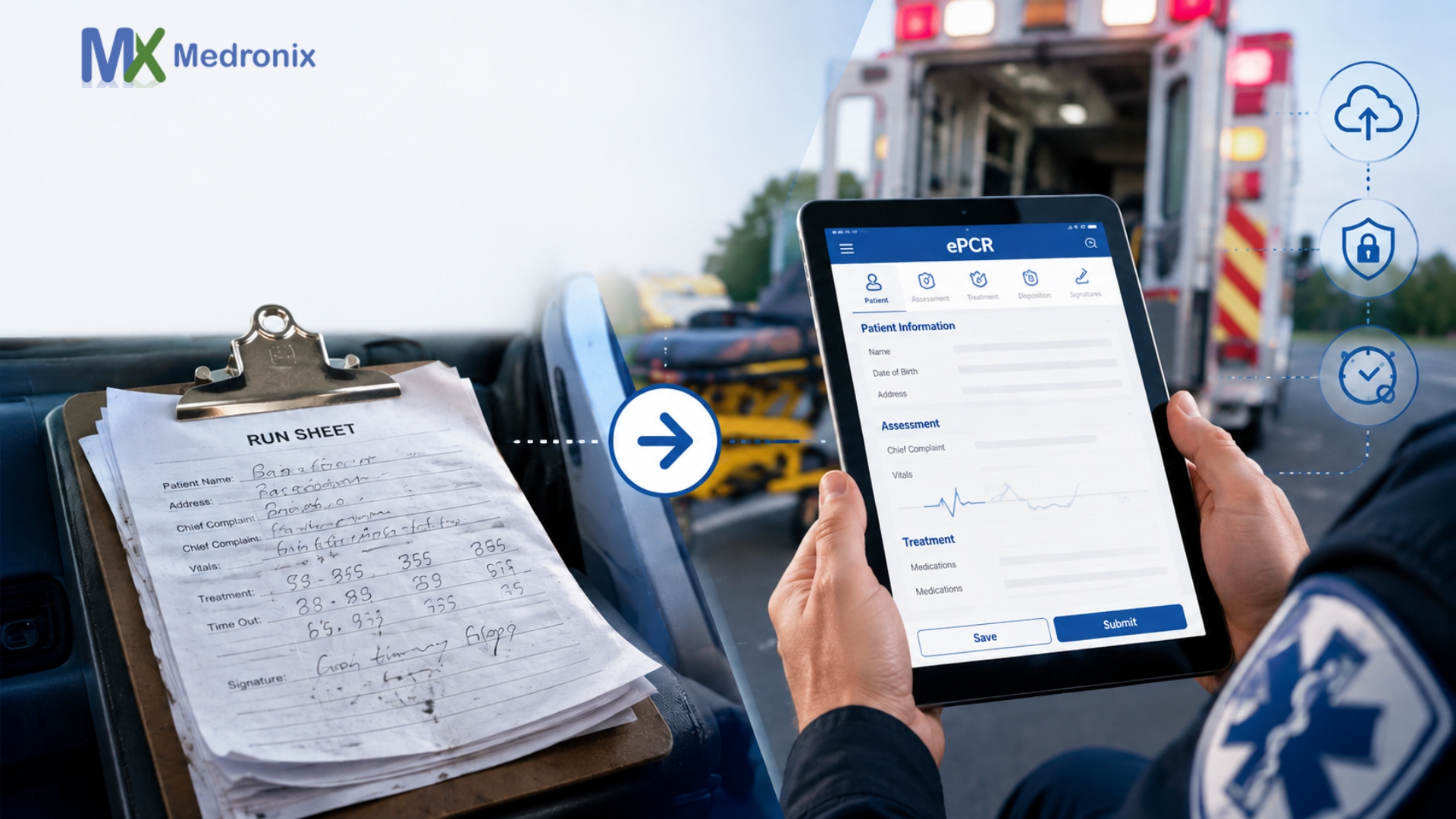
Every EMS crew in the country knows the feeling: the call ends, the patient is handed off, and now someone has to write it all down. For decades, that meant a paper run sheet, a clipboard, and handwriting that a billing clerk would later squint at and try to interpret. Today, a growing number of US ambulance services are replacing that process with ambulance ePCR software, and the shift is changing more than just how charts look.
ePCR stands for electronic patient care report. In practice, ePCR ambulance software is the digital system EMS crews use in place of a paper run sheet to document a patient encounter, vitals, treatment, narrative, signatures, and everything else a call requires. The best platforms don’t just digitize the paper form; they actively catch mistakes as a crew types, flag missing vital signs before a chart is closed, and push that record straight into QA and billing workflows without anyone re-typing or scanning a thing.
For agencies still running paper or an outdated legacy system, the transition to ePCR software matters more than it might sound. The real payoff of any electronic reporting system for patient care shows up in two places: fewer charts kicked back by quality assurance, and a shorter gap between when a call closes and when a claim actually goes out.
Three pressures are pushing US ambulance services toward modern EMS ePCR software faster than ever.
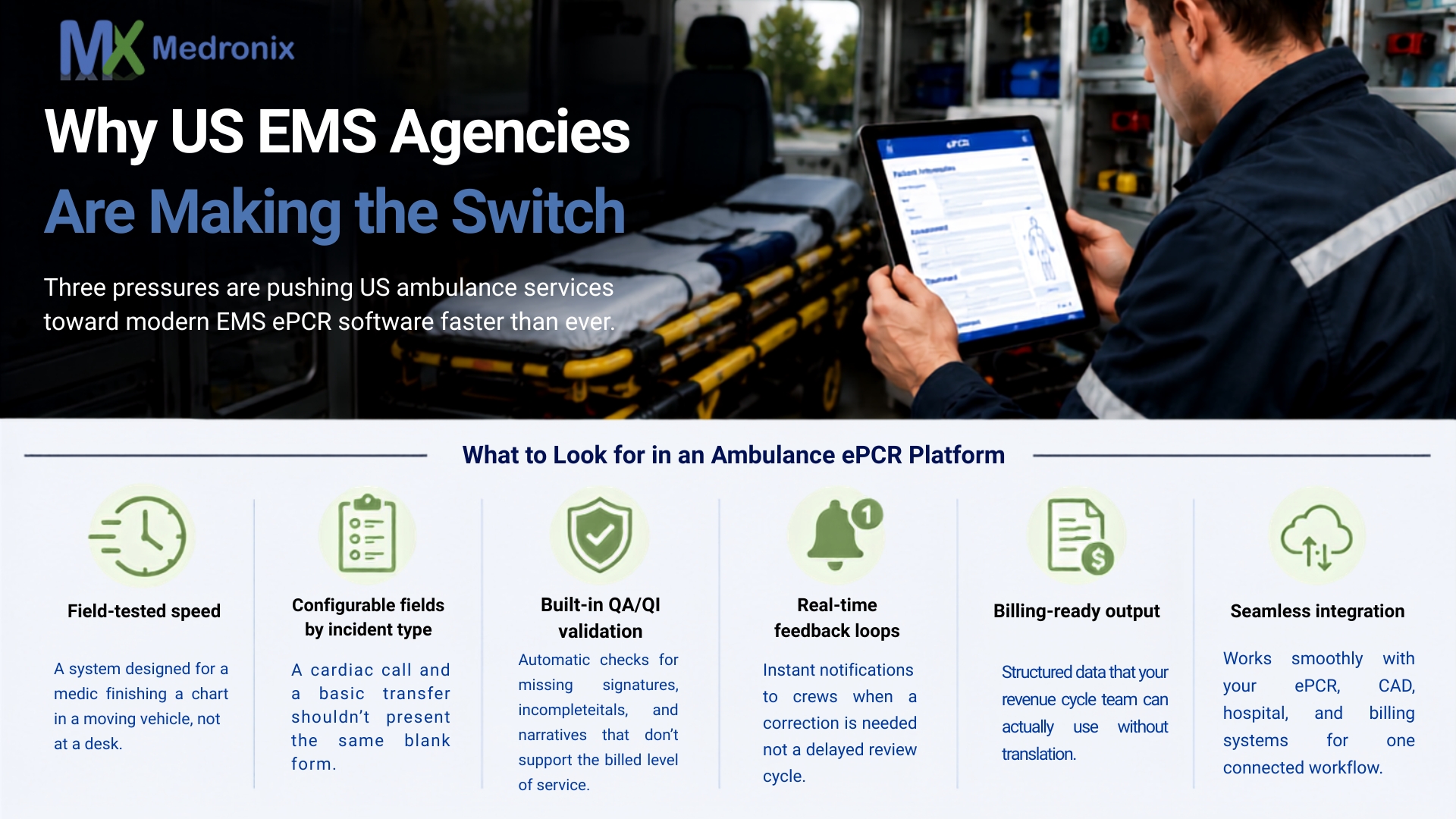
Not every EPCR tool is built the same way, and the difference usually shows up in the field, not in a sales demo. When evaluating ambulance ePCR software, US agencies should look for:
The shift from paper to ePCR software directly reduces denied claims, minimizes QA rework, and enables crews to complete accurate charts within the same shift they are written in. For US EMS agencies weighing their options, the platforms worth a serious look are the ones built around real field conditions, not just a compliance checklist.
It replaces the paper run sheet with a digital chart.
It’s built for EMS workflows, with QA and billing.
Yes, cleaner charts mean fewer denials and faster claims sent.
Yes, it is beneficial for dialysis and planned transfers.
Yes, it is meant for quick entry when on the move in vehicles.