
Clinical teams are under constant pressure to see more patients while keeping documentation accurate and complete. This is exactly why AI medical charting tools have moved from a luxury to have to a core part of daily practice. These tools listen, summarize, and structure patient encounters in real time, giving physicians hours back in their week.
Choosing the correct technology is not only about automation. It is about accuracy, compliance, and how well the tool fits into an already busy clinical day. This blog walks through what modern charting technology can do, what to look for, and how to bring it into your workflow without disrupting patient care.
Manual documentation has long been one of the biggest sources of physician burnout. Clinicians often spend more time typing notes after hours than they do speaking with patients during the day. This gap between patient care and paperwork has pushed hospitals and private practices to look for smarter solutions.
Most modern charting platforms have natural language processing and speech recognition capabilities that convert conversations into structured clinical notes. Rather than writing during or after a visit, physicians can concentrate on the patient while the system generates the documentation in the background. Many practices now employ an AI scribe for clinicians to automate this step, reducing workdays, minimizing errors and improving patient engagement during appointments.
Not all of the platforms available are the same, so it helps to understand what makes a powerful tool different from a basic one. The best AI medical documentation software integrates with existing electronic health record platforms, not requiring staff to work in a separate window. It should also accommodate multiple specialties, since a note from a cardiologist looks very different from a note from an orthopedist.
Before selecting a platform, clinical teams should carefully consider the following capabilities.
These qualities have a direct impact on the actual amount of time a tool saves you. A platform that requires heavy manual editing after each visit defeats the purpose of automation in the first place.
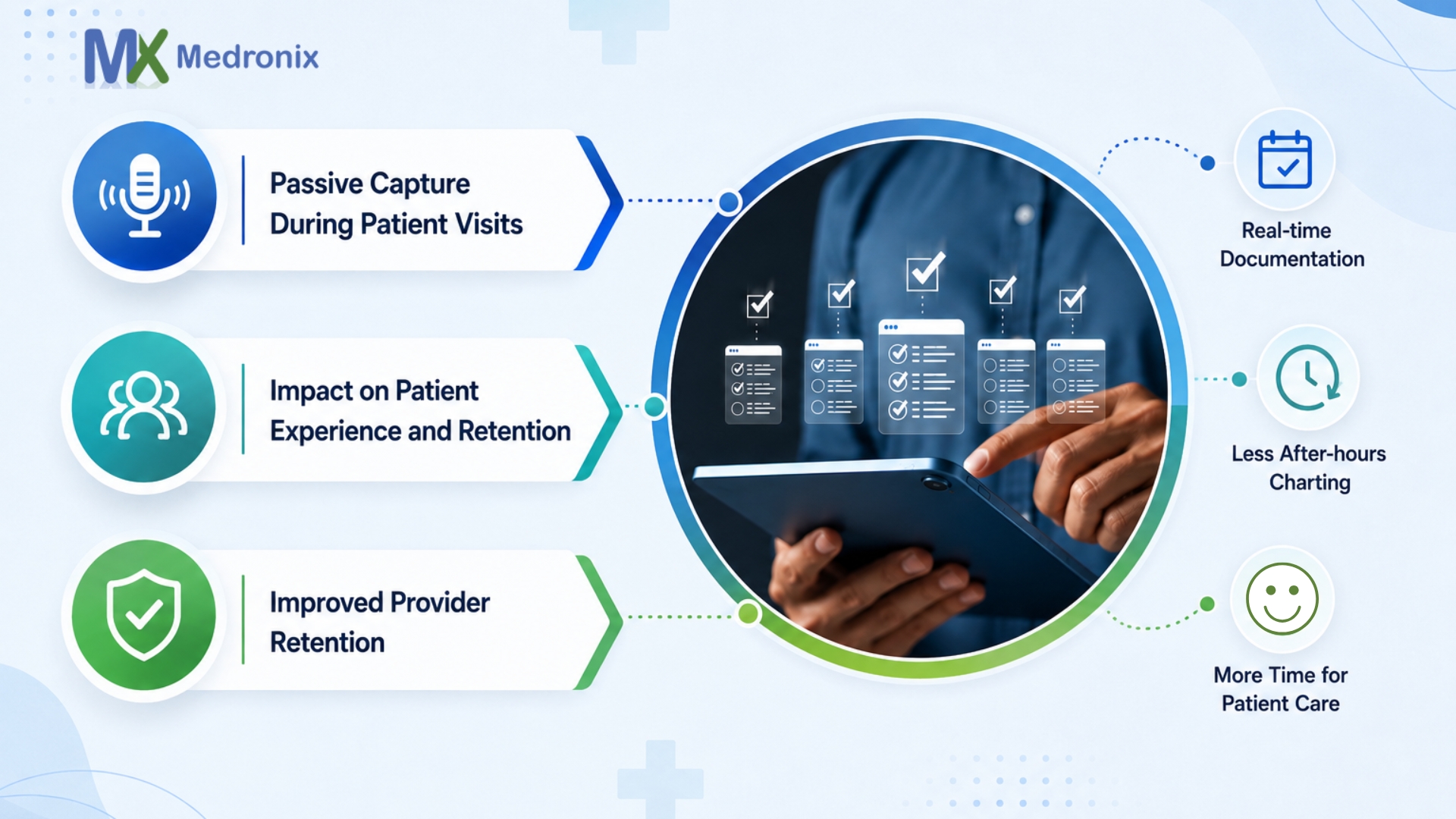
Ambient listening technology has changed the way physicians perceive note-taking. Instead of pausing a conversation to type or dictate, modern ambient clinical documentation tools work quietly in the background, capturing the encounter as it happens rather than after the fact.
The system listens to the conversation and produces a draft note almost immediately after the encounter ends. Physicians no longer need to divide their focus between the patient and the screen, which has considerably cut down the after-hours charting for many clinicians..
Reduced administrative load also improves the patient experience during the visit. When a doctor is not distracted by a keyboard, eye contact and conversation flow naturally, which patients consistently rate as a better visit and which strengthens satisfaction scores over time.
Provider retention benefits follow the same pattern. Burnout remains one of the leading reasons clinicians leave a practice, so lightening the documentation load has become a direct factor in keeping experienced staff on the team.
Selecting a documentation partner is a decision that affects every department, not just the front-line providers. Administrators need to think about how the platform handles data security, since patient information has to be protected under strict healthcare regulations. If a service can’t clearly articulate its compliance framework, that should be a red flag.
It matters, too, how the platform scales. A small clinic and a multi-location hospital system have very different needs, so the chosen service should offer flexible deployment options. True clinical documentation automation should adapt to organizational size rather than forcing every team into the same fixed workflow, so ask vendors for real-world case studies before making a long-term commitment.
Rolling out new medical charting automation solutions works best when it happens in phases rather than all at once. You can start with a small subset of physicians who are comfortable with trying new technology and go bigger once you’ve honed the workflows and received feedback. It cuts down on resistance and helps to identify integration issues early.
Another often overlooked element is training. Even the most intuitive platform requires a short ramp up of staff to learn how to review and finalize AI-generated notes. Clear internal guidelines on editing and sign-off responsibilities will make sure documentation is both fast and accurate as adoption grows across the organization.
AI-driven software to automate the writing of clinical notes.
You can order one directly from the provider website.
Often several hours per week on documentation.
Yes, once the provider reviews it and finalizes it.
Yes, compliant platforms need strong requirements for data security.